-
teléfono : +86-592-6382791
-
Email : sales@pidmaxwell.com
teléfono : +86-592-6382791
Email : sales@pidmaxwell.com


I.¿Cuál es la esencia de la regulación de potencia?
La regulación de potencia lograda por el regulador de potencia es esencialmente la gestión activa de la potencia eléctrica promedio en la carga de calentamiento. La carga a la que se hace referencia aquí incluye tubos calefactores eléctricos comunes, alambres de resistencia metálicos y lámparas de radiación infrarroja, así como varillas de carburo de silicio y elementos calefactores de disiliciuro de molibdeno utilizados en condiciones de alta temperatura, e incluso calentadores especiales alimentados por transformadores reductores.
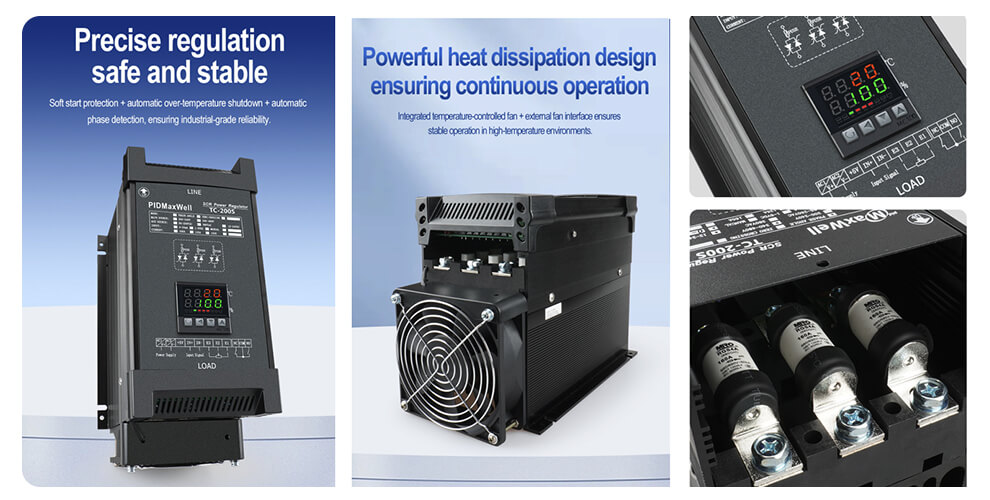
La cantidad total de energía eléctrica que una carga toma de la red determina directamente su salida de calor. Cuanta más energía eléctrica se introduce, mayor es el calor generado por unidad de tiempo; por el contrario, cuanto menor es la energía eléctrica de entrada, menor es la salida de calor. La función de un regulador de potencia es cambiar dinámicamente la proporción de energía eléctrica entregada a la carga mediante control electrónico, interviniendo así de forma eficaz en la velocidad de calentamiento y manteniendo la temperatura cerca de la temperatura objetivo.
II.¿Qué comandos utiliza un regulador de potencia para operar?
En una arquitectura de control de temperatura en lazo cerrado, el propio regulador de potencia no detecta directamente los cambios de temperatura. En su lugar, actúa como un terminal de ejecución, recibiendo instrucciones de la unidad de control de nivel superior. Estas instrucciones suelen ser emitidas por el controlador de temperatura, el controlador lógico programable o el sistema de control distribuido.
Los tipos de señales de comando comúnmente utilizados incluyen: señales de bucle de corriente de 4-20 mA, señales de voltaje de CC de 0-10 V, señales analógicas de bajo voltaje de 1-5 V y señales de modulación por pulsos de frecuencias específicas. Generalmente, la amplitud de la señal de comando está positivamente correlacionada con la potencia requerida: una señal más fuerte significa que el sistema requiere mayor salida, mientras que una señal más débil indica una reducción de potencia. Esto ha dado lugar a una división del trabajo en la que los controladores de temperatura son responsables de la “evaluación y toma de decisiones”, mientras que los reguladores de potencia se centran en la “ejecución de potencia”.
III.¿Cómo cambia la regulación de potencia según las condiciones de operación?
Tomando como ejemplo un horno industrial de secado por circulación de aire caliente, la temperatura objetivo se establece en 180 °C. Durante la fase inicial de arranque, la temperatura del horno es mucho más baja que el valor de consigna. Después del cálculo PID, el controlador de temperatura emite una señal de control de alta amplitud. En base a esto, el regulador de potencia ajusta la potencia de salida a un nivel más alto, haciendo que los elementos calefactores funcionen a plena potencia, logrando un calentamiento rápido.
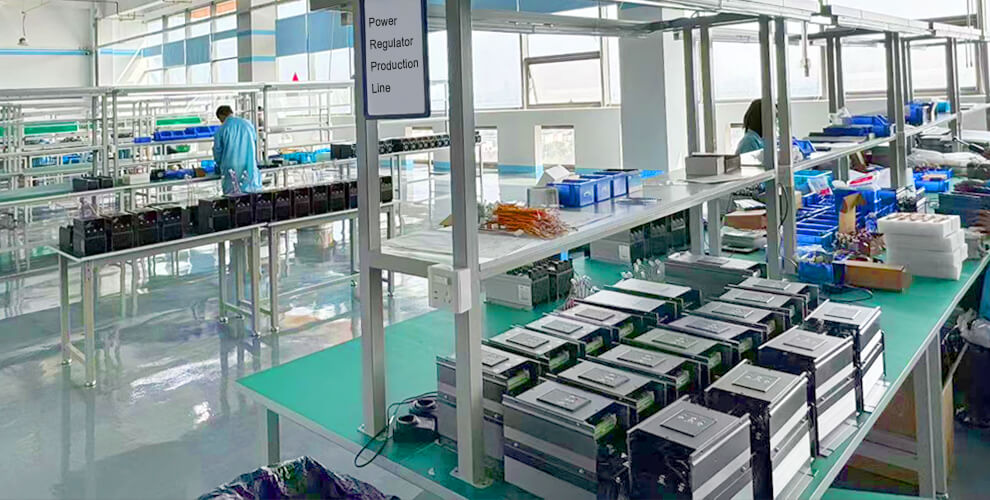
A medida que la temperatura del horno se acerca gradualmente al umbral de 180 °C, la señal de comando emitida por el controlador comienza a disminuir. El regulador de potencia reduce la potencia de salida de forma sincronizada para evitar que la temperatura real, debido a la inercia térmica, supere el valor objetivo. Cuando el sistema entra en la etapa de estado estacionario de temperatura constante, la potencia de salida se estabiliza en un nivel más bajo, que solo se utiliza para compensar las pérdidas de calor del cuerpo del horno hacia el entorno, controlando así la fluctuación de la temperatura dentro del margen permitido.
IV. ¿Cómo los componentes centrales internos soportan la regulación de potencia?
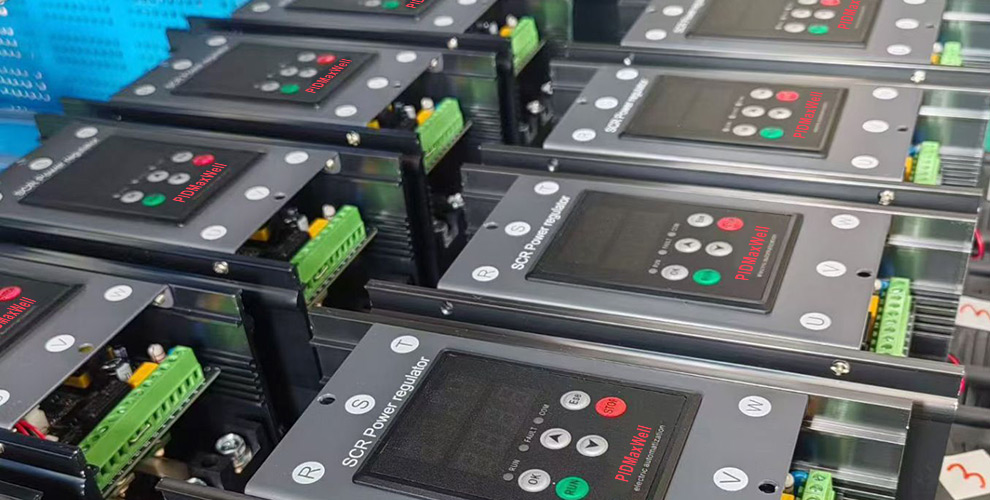
El núcleo de un regulador de potencia suele utilizar un dispositivo semiconductor controlado por rectificador —el tiristor (SCR)— como elemento de conmutación. Este dispositivo tiene características de conducción por disparo de compuerta, lo que le permite comenzar a conducir en un punto de fase específico de la corriente alterna.
Ajustando el momento del pulso de disparo, se puede controlar con precisión la duración del intervalo de conducción del tiristor dentro de cada semiperiodo de la frecuencia de potencia; alternativamente, combinando los estados de encendido y apagado de un ciclo completo, se puede alterar la relación de entrega de energía por unidad de tiempo. Este mecanismo de ajuste dinámico continuo permite al regulador de potencia modificar con precisión la potencia media de la carga, lo cual constituye la base tecnológica de su importante ventaja en precisión de control de temperatura frente a los contactores electromagnéticos tradicionales.
V. ¿Cuáles son las diferencias entre las estrategias principales de regulación de potencia?
Actualmente, los métodos de regulación de potencia comúnmente utilizados en entornos industriales pueden clasificarse ampliamente en dos tipos: disparo por control de fase y disparo por cruce por cero.
El control por disparo de fase es adecuado para aplicaciones que requieren alta continuidad de salida. Su característica consiste en recortar el ángulo de conducción de cada semionda de la señal sinusoidal de CA, lo que da como resultado una forma de onda de salida con deficiencia de fase. Ofrece alta resolución de ajuste, pero puede generar cierta interferencia armónica.El control por disparo de cruce por cero, por otro lado, realiza la acción de encendido o apagado en el instante en que el voltaje de CA cruza naturalmente por cero. Regula la potencia cambiando la relación de conducción de la onda sinusoidal completa dentro de una ventana de tiempo específica. Este método tiene menor impacto e interferencia en la red eléctrica y es especialmente adecuado para cargas de calentamiento con características puramente resistivas.
VI. ¿Qué dispositivos típicos no pueden funcionar sin un regulador de potencia?
Los reguladores de potencia desempeñan un papel clave en muchos equipos industriales. Las aplicaciones comunes incluyen: diversos hornos de resistencia industriales, hornos de secado de temperatura y humedad constantes, líneas de producción de tratamiento térmico de metales, canales de secado tipo túnel, hornos de sinterización de cinta de malla, sistemas de calentamiento por radiación infrarroja, equipos de extrusión de plásticos, maquinaria de sellado térmico y envasado, hornos de recocido de vidrio, hornos de cocción de cerámica y dispositivos de calefacción de apoyo para reactores químicos.
Estos dispositivos comparten características comunes: tienen altos niveles de potencia de calentamiento y requisitos estrictos de uniformidad y estabilidad del campo de temperatura, y no pueden cumplir las especificaciones del proceso basándose únicamente en el control simple de encendido y apagado.
VII. ¿Cómo afecta la calidad de la regulación de potencia al efecto de control de temperatura?
La suavidad de la regulación de potencia afecta directamente el rango de fluctuación de la temperatura controlada. Especialmente cuando la temperatura se acerca al valor de consigna, si la potencia de salida no puede disminuir de forma suave, el sistema es muy propenso a sobrepasos, provocando picos momentáneos de temperatura.
Gracias a sus características de ajuste continuo o de alta resolución, el regulador de potencia hace más suave la transición entre la etapa de calentamiento, la etapa de aproximación y la etapa de temperatura constante, y puede suprimir eficazmente las oscilaciones de temperatura, mejorando así la calidad de la respuesta dinámica y la precisión en estado estacionario de todo el sistema de control de temperatura.
VIII. ¿Qué puntos clave deben considerarse al seleccionar e instalar equipos para un proyecto?
Al implementar reguladores de potencia, deben considerarse de forma integral varios factores de ingeniería. Primero, se deben verificar el voltaje nominal de operación, la corriente en estado estacionario y la corriente máxima de la carga para asegurar que coincidan con la capacidad del regulador. Segundo, el tipo de señal de control debe ser coherente con el puerto de salida del sistema principal. Además, los dispositivos de potencia generan pérdidas de calor durante su funcionamiento, por lo que se requieren disipadores de calor adecuados y una buena ventilación dentro del gabinete de control. Asimismo, las conexiones eléctricas del circuito principal y de los terminales de control deben ser firmes y fiables para reducir el riesgo de sobrecalentamiento localizado debido a la resistencia de contacto.
Si el equipo funciona a plena carga durante períodos prolongados, o si la temperatura ambiente dentro del gabinete es alta, la temperatura de unión de los módulos de potencia puede aumentar, acelerando el envejecimiento del dispositivo y acortando la vida útil general del sistema.
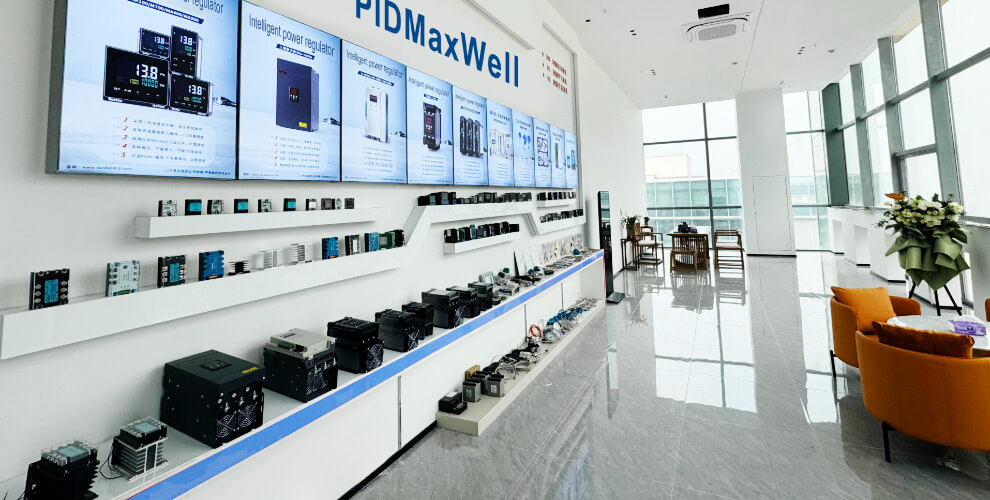
En resumen, el proceso mediante el cual un regulador de potencia controla la potencia de calentamiento puede considerarse un comportamiento dinámico en lazo cerrado que ajusta en tiempo real el suministro promedio de energía eléctrica a la carga en función de comandos externos. Su introducción permite que los sistemas de calentamiento industrial superen la limitación binaria de “calentamiento a plena potencia” o “apagado completo”, transformándolos en nodos inteligentes de control de temperatura capaces de adaptar automáticamente la intensidad de salida según las variaciones de la carga térmica.
Este artículo fue compilado y publicado por el equipo de Hequan Automation Technology únicamente para el intercambio profesional de conocimientos y referencia en el campo de la automatización eléctrica industrial.

dirección : NO.201 Binhuyili, HaiCang district, XiaMen,FuJian, China 361026
Max liao: +8618150368619(whatsapp)
Email : sales@pidmaxwell.com
escanear a través de wechat

Scan to Whatsapp