-
teléfono : +86-592-6382791
-
Email : sales@pidmaxwell.com
teléfono : +86-592-6382791
Email : sales@pidmaxwell.com


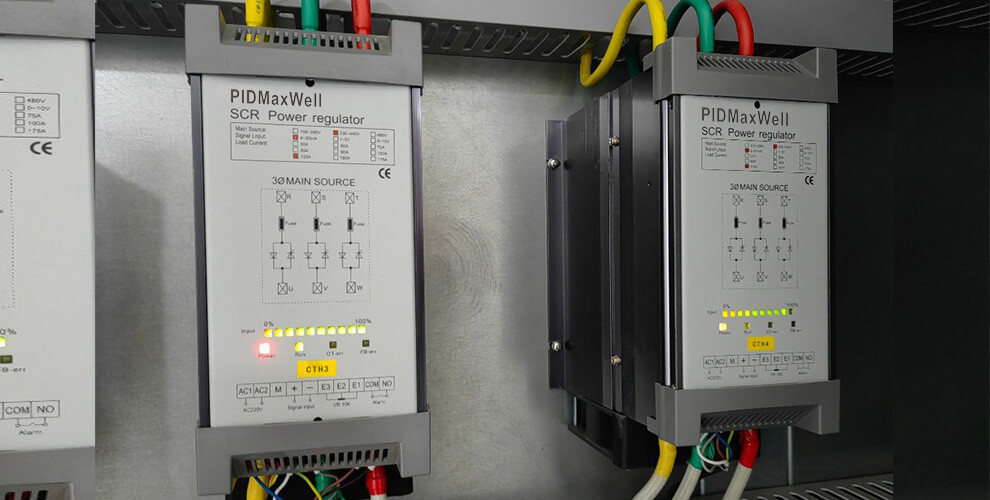
Cada verano, los armarios eléctricos del taller empiezan a dar problemas.
En cuanto el equipo empieza a funcionar, la temperatura dentro de los armarios se dispara. No puedes detener las máquinas ni puedes tocarlas. Escanear la superficie del armario con un termómetro infrarrojo desde la distancia te pone los pelos de punta.
En este punto, la primera reacción de muchas personas suele ser:
"¿Es que este verano hace demasiado calor?"
"¿El armario está demasiado lleno?"
"¿El ventilador de extracción no tiene suficiente potencia?"
Todas estas son posibilidades. Pero, sinceramente, muchas personas pasan por alto algo que debería supervisarse de cerca: ¿la disipación de calor del regulador de potencia es suficiente?
El propio regulador de potencia es un dispositivo de control de alta potencia; mientras esté funcionando, genera calor. No se calienta solo ocasionalmente; está constantemente "produciendo y consumiendo" calor.
Si la selección inicial fue demasiado ajustada, el armario está abarrotado, los conductos de aire están bloqueados por bandejas de cables, el ventilador de refrigeración está atascado y nadie lo nota, y se acumula una capa de polvo en los huecos del disipador de calor, entonces sería extraño que no surgieran problemas en verano.
Estas son algunas situaciones habituales en campo; comprueba si te resultan familiares:
En cuanto se abre la puerta del armario, una ola de calor te golpea; incluso el dorso de la mano se siente tan caliente que te hace retroceder.
La luz de alarma de sobretemperatura del panel del regulador de potencia se enciende, y en ocasiones incluso activa una parada de protección.
Los tornillos de los bloques de terminales están ardiendo; las imágenes térmicas muestran temperaturas muy por encima de los rangos normales.
El ventilador de refrigeración no solo está girando; está rugiendo y funcionando constantemente a alta velocidad.
El equipo funciona perfectamente por la mañana, pero por la tarde se vuelve inestable y funciona de forma intermitente.
Cada año, de junio a agosto, el número de fallos reportados aumenta significativamente.
Sinceramente, la mayoría de las veces no es que el regulador de potencia sea inutilizable o de mala calidad. Es que el entorno de instalación simplemente no le deja suficiente espacio para sobrevivir.
Es como hacer que alguien corra un maratón con un abrigo grueso de invierno en verano, completamente cubierto; si ya no puede correr, no puedes culparlo por ser débil, ¿verdad?
Un regulador de potencia puede ayudarte a controlar la potencia de calentamiento de forma estable y uniforme, pero solo si puede "respirar" correctamente.
Los dispositivos de potencia son más vulnerables a la exposición prolongada a altas temperaturas. Cada ligero aumento de temperatura acorta su vida útil; esto no es una exageración, es una ley fundamental de la física.
Por lo tanto, al seleccionar un regulador de potencia, no te centres solo en su corriente nominal. Lo que realmente necesitas saber es: ¿cuál es la corriente de carga real? ¿El equipo funciona de forma continua o intermitente? ¿Cuál es la temperatura normal de funcionamiento dentro del armario de control? ¿Cuánto espacio queda alrededor del lugar de instalación? ¿Los ventiladores y las rejillas de ventilación están bloqueados? ¿El disipador de calor está montado vertical u horizontalmente? ¿Hay otros componentes grandes que generen calor compitiendo por el flujo de aire cerca?
Estos factores son mucho más importantes que la corriente nominal indicada en la placa de características.
Un regulador de potencia adecuado, junto con una refrigeración suficiente y razonable, garantizará el funcionamiento estable del equipo durante todo el verano. Para la fábrica del usuario final, un funcionamiento estable es mucho más importante que ahorrar unos cientos de dólares al principio. Una hora de parada podría provocar la pérdida de miles o incluso decenas de miles de dólares en ingresos de producción. Para los fabricantes de equipos, un paso adicional en el diseño inicial de refrigeración reducirá a la mitad las llamadas de servicio posventa. Los clientes estarán más tranquilos y tu reputación crecerá.
Por eso, cuando encuentres temperaturas anormalmente altas en tus armarios eléctricos, no te apresures a culpar al clima.
Tómate un momento para considerar tres cosas:
Primero, ¿hay suficiente margen en la selección del regulador de potencia?
Segundo, ¿el espacio de instalación dentro del armario es demasiado reducido?
Tercero, ¿el flujo de aire de refrigeración está libre de obstrucciones?
Si no estás seguro de si tu armario eléctrico tiene un problema de refrigeración, es sencillo: toma una foto frontal de la distribución interna del armario y dime la potencia del equipo, el voltaje y la corriente de carga real. Puedo ayudarte a comprobar si la ubicación de instalación del regulador de potencia y las condiciones de refrigeración siguen estando dentro de límites razonables.
El verano es largo; no dejes que un solo regulador de potencia reduzca la producción de toda la línea de fabricación.
La estabilidad es más importante que el precio. La refrigeración es más crítica de lo que crees.

dirección : NO.201 Binhuyili, HaiCang district, XiaMen,FuJian, China 361026
Max liao: +8618150368619(whatsapp)
Email : sales@pidmaxwell.com
escanear a través de wechat

Scan to Whatsapp