-
teléfono : +86-592-6382791
-
Email : sales@pidmaxwell.com
teléfono : +86-592-6382791
Email : sales@pidmaxwell.com


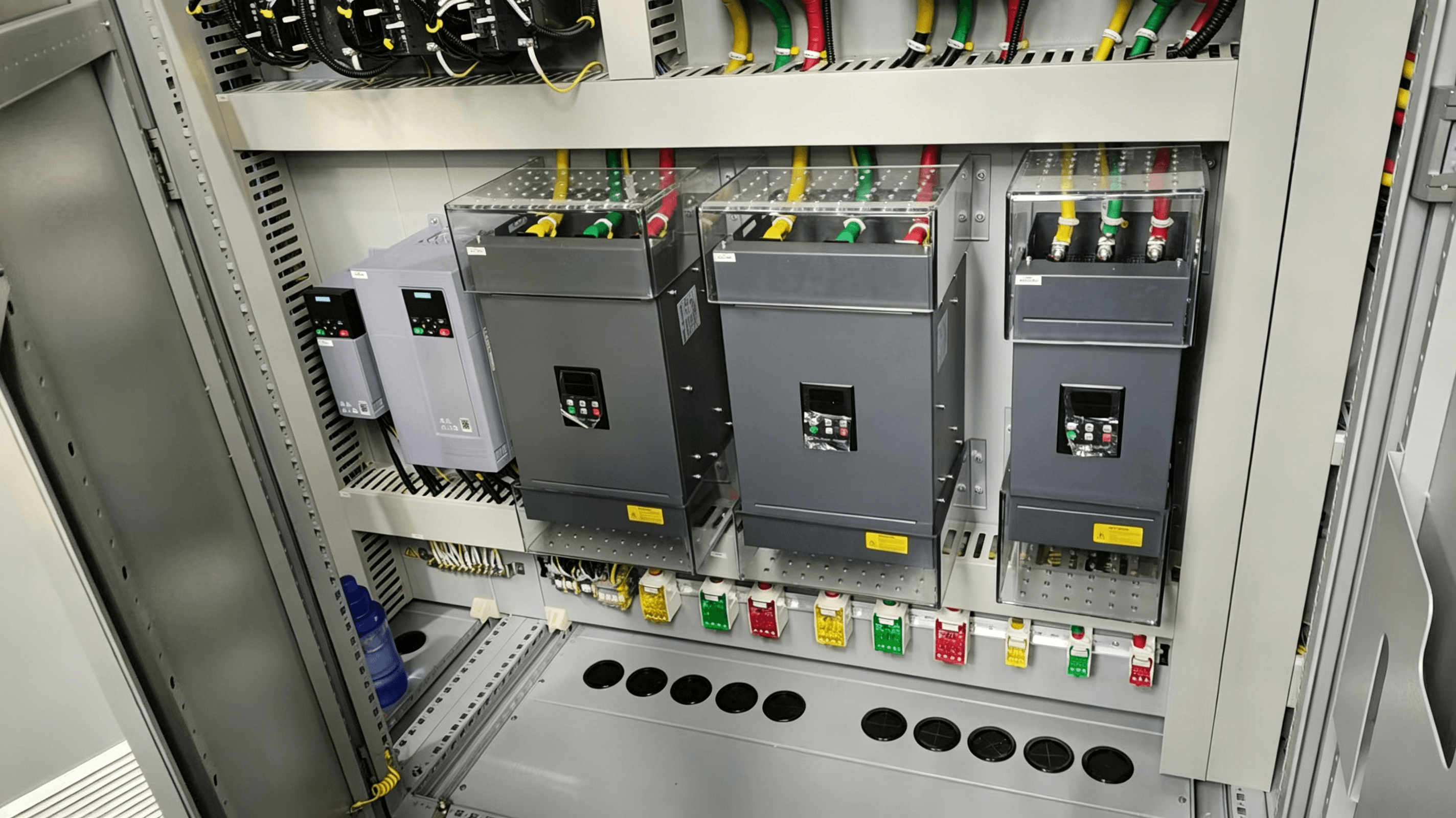
Many clients in the electric heating sector often ask us at PIDMaxWell: "How exactly does a power controller adjust power?" In reality, what clients truly care about isn't the technical names of the internal components, but rather: Is the temperature stable? Will it save on electricity costs? Will the equipment experience unexpected downtime? And will the heating elements last longer? As a primary manufacturer of power controllers, we at PIDMaxWell frequently work with applications like industrial ovens, electric furnaces, heat treatment systems, and infrared heating. Let’s break it down in plain, accessible language.
A power controller is not a standard mechanical switch. Its main circuit contains a thyristor—also known as an SCR (Silicon-Controlled Rectifier). This component acts like an electronic gate: current can only flow through once the gate receives a trigger signal. However, once the current is flowing, the gate cannot "turn it off"; the device only switches off when the AC current naturally crosses the zero point. Because it has no physical contacts, it doesn't suffer from the wear and tear associated with the repeated opening and closing of traditional contactors. It also offers rapid response, making it ideal for heating processes that require frequent adjustments.
AC power alternates between positive and negative, crossing the zero point continuously. A thyristor has the opportunity to conduct during each half-cycle of the AC waveform. If triggered early, the conduction duration is longer, delivering more energy to the load; if triggered later, the duration is shorter, delivering less energy. By continuously varying the conduction timing within each cycle, the average power supplied to the heating elements is adjusted. This results in a smoother temperature profile, avoiding the erratic fluctuations often seen otherwise.
This method of adjusting conduction timing is known as "phase-angle control." Its advantages include precise regulation and fast response, making it well-suited for processes that demand high temperature stability. However, because it "chops" the AC waveform, it can introduce harmonics and electrical interference. If your facility has limited grid capacity, sensitive precision equipment nearby, or if you are using multiple power controllers simultaneously, this should be evaluated in advance. At PIDMaxWell, when helping clients select the right equipment, we don't just ask about the current rating; we also inquire about the load type, grid conditions, and the specific temperature profile required—all to ensure a trouble-free operation for the client.
Another method is "zero-crossing control." Instead of switching in the middle of a half-cycle, this method triggers the thyristor (SCR) to turn on or off when the voltage is near the zero-crossing point, distributing power based on complete cycles. For instance, by allowing power to flow during some cycles while cutting it off during others, the average power output can be precisely controlled. This approach is well-suited for resistive heating loads; it minimizes electrical grid interference and offers a better power factor. The trade-off is that the resolution of power adjustment depends on the number of cycles, which may result in slightly larger temperature fluctuations compared to phase-angle control. The choice between these methods should be based on the specific application—such as precision heat treatment versus general air-duct or infrared heating—rather than just the price.
For the end-user, the benefits of using a power controller are clear and tangible. Stable temperatures ensure product consistency and reduce scrap rates. Power is delivered only as needed, minimizing energy waste. Solid-state switching eliminates the need for mechanical contactors, thereby avoiding the wear and tear caused by frequent mechanical make-break operations. Furthermore, rapid response times allow for smoother transitions between heating and holding phases, which helps extend the service life of heating elements. In industrial heating applications that require frequent power adjustments, relying on traditional contactors—which force hard on/off switching—inevitably leads to mechanical wear and operational shocks, eventually resulting in costly production downtime.
At PIDMaxWell, we focus our efforts on the critical, behind-the-scenes details that directly impact performance. This includes building in safety margins during component selection—accounting for cold-start inrush currents and ambient temperatures—and ensuring that the thermal management system (fans, air ducts, and heatsinks) is properly matched to the cabinet space. We also ensure comprehensive protection against overcurrent, overvoltage, overheating, and phase loss. Our units are designed to integrate seamlessly with existing temperature and control systems, and every device undergoes rigorous under-load aging tests before leaving the factory to minimize the risk of field failures. When a customer chooses us, they aren't just buying a module; they are investing in a reliable, long-term power control solution.
There are also several common pitfalls to avoid during operation. An undersized cabinet or poor ventilation can easily trigger overheating alarms. Poor terminal contact can lead to excessive heat or even component burnout. Mixing different types of loads can be problematic, as they may require different triggering methods or protection settings. Additionally, in environments with significant electrical grid interference, the use of phase-angle control should be carefully evaluated. Communicating these details to the manufacturer in advance is far more cost-effective than dealing with equipment failure and the subsequent need for replacement. Ultimately, a power regulator functions by using a thyristor (SCR) to modulate the conduction of alternating current based on control signals, thereby adjusting the average power delivered to the load. However, what customers truly need is stable temperature control, reasonable energy costs, minimal equipment downtime, and hassle-free maintenance. At PIDMaxWell—a primary manufacturer of power regulators—we ensure these needs are met through meticulous attention to product selection, thermal management, system protection, rigorous testing, and customization, providing each client with a solution perfectly tailored to their specific operating conditions.

dirección : NO.201 Binhuyili, HaiCang district, XiaMen,FuJian, China 361026
Max liao: +8618150368619(whatsapp)
Email : sales@pidmaxwell.com
escanear a través de wechat

Scan to Whatsapp